Start with the load
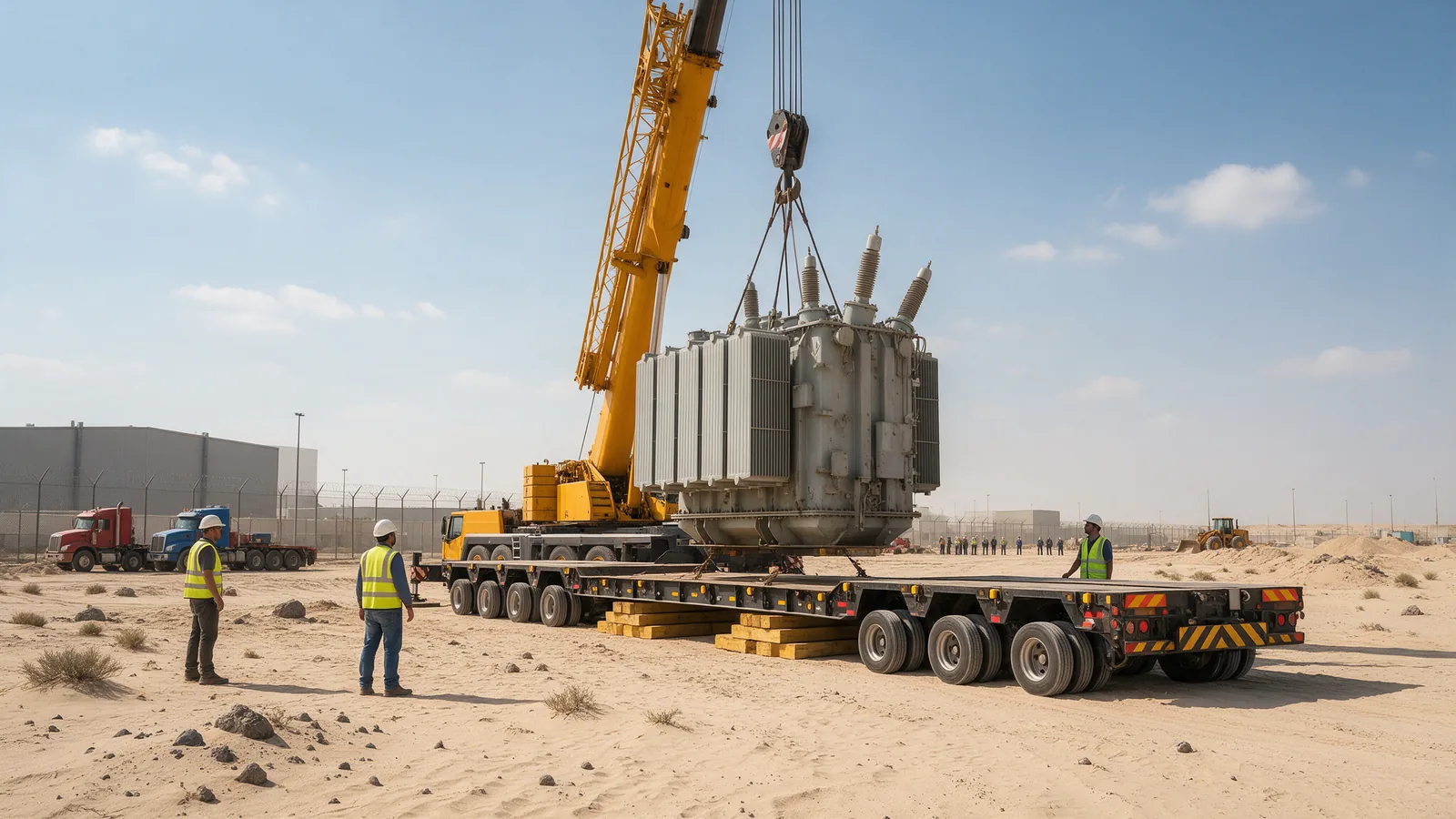
Rig equipment, machinery, steel and oversized cargo need planning for each individual item. Share dimensions, weight, centre of gravity and available lifting points, with photographs and drawings to help determine the trailer and securing arrangements.
Select equipment and review the route
Long flatbeds, lowbeds and boom trucks provide options for transport, lifting and handling. The team reviews routing, permits, escort requirements and site access, then connects departure timing to the receiving window.
Connect the port to the project plan
Identify the arrival port, cargo-ready date and final destination. The customs clearance team coordinates procedures and documentation with transport, adding storage arrangements where the project schedule requires a gap between arrival and delivery.
Prepare for unloading
Agree a site contact, unloading equipment, manoeuvring space and lifting points. Sharing site requirements early helps prevent last-minute equipment changes on arrival.
Follow each stage
Mix Telematics and AWTL support GPS vehicle monitoring, while the 24/7 control room assists journey management and changes to routing or schedules. The plan follows the same quality, safety and environmental management system that governs Cross Roads operations. Send the cargo details and required timing to the sales team to begin reviewing the transport plan and quotation.